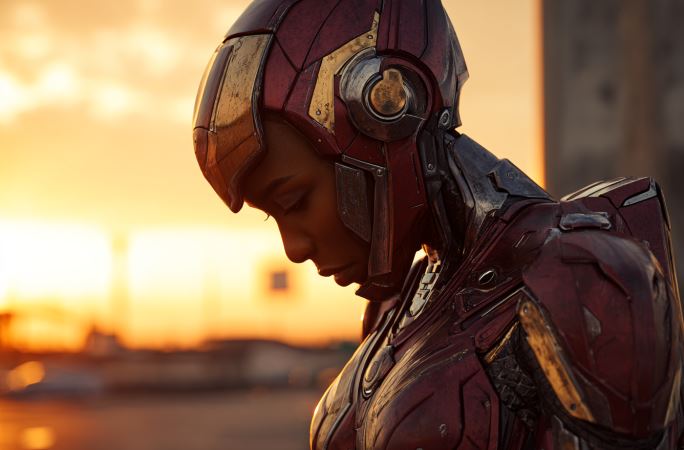
It’s been a few months since Ironheart landed, and now that the hype has cooled, it’s easier to see what worked — and what didn’t.
When Marvel introduced Riri Williams—young, brilliant, and unapologetically Black—I wanted to believe we were witnessing the rise of a new kind of hero. But from the moment she entered the scene, something felt off—not in her potential, but in how audiences and the industry handled her story. This blog isn’t about tearing down the show. It’s about exploring what went wrong, why it mattered, and what it says about how we treat stories that don’t come in the packaging some folks expect.
Ironheart: A Look at What Went Wrong – and Why It Matters
***Warning: Spoilers Ahead***
The Introduction That Missed
When we first met Riri Williams in Wakanda Forever, she was a college student running an under-the-table business doing other students’ homework. Illegal. Grounds for expulsion. Now I’m not saying she deserved what came next, but we’re not exactly introduced to a hero. Then the government — as it does — swoops in and weaponizes her brilliance. She becomes a pawn in a bigger political and military game.
That’s actually compelling stuff. But they didn’t let it breathe. And when we finally see her in her own show, she’s expelled, bitter, guarded, and aligning herself with criminals. Not reforming them. Not investigating them. Just vibing with them. And we’re supposed to cheer for that?
There’s a reason people fell in love with characters like Peter Parker. He was flawed, yes — but his intentions were never murky. His struggle was ours. With Riri, the writing doesn’t give us the emotional anchor. She walks away from anything that doesn’t go her way. It’s very “Buffy the Vampire Slayer” Season 6 — all brooding, no charm.
Wasted Potential in a Wasted World
I saw what they were trying to do. Make it edgy. Make it gritty. But it wasn’t compelling. Even the villain felt undercooked. No real descent into evil, no layered motivations. Just conflict for the sake of conflict.
You know who did work? Riri’s AI friend (N.A.T.A.L.I.E.) who came back from the dead. That was a brilliant thread — an AI model frozen with PTSD, remembering her own death and freezing again in the presence of a gun. That was layered. Satisfying. That was good writing.
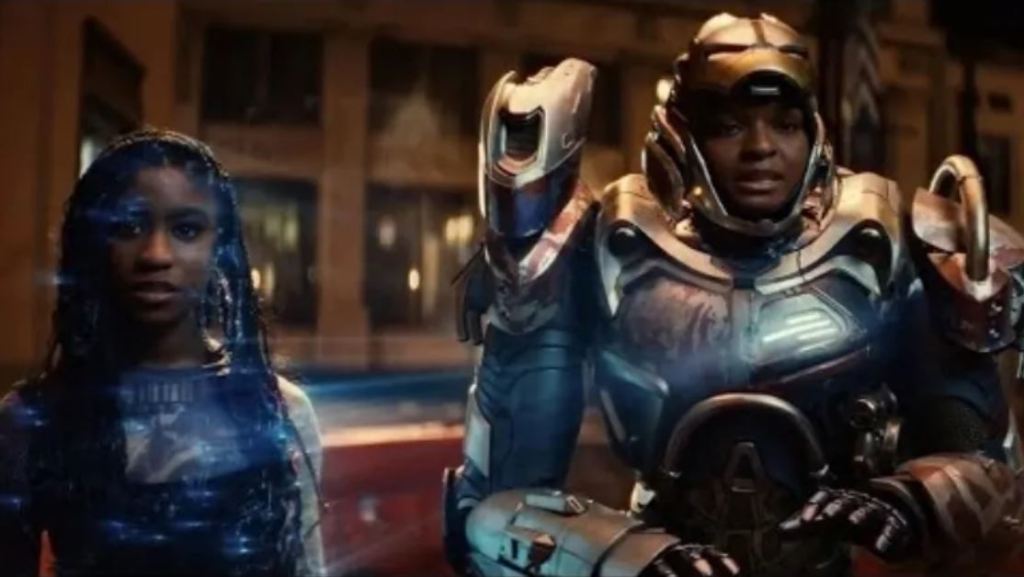
And how does the whole thing end?
Not a moment of redemption. Not a moment of clarity. Not even a crisis of conscience.
Riri aligns with Mephisto – Marvel’s version of the devil. Sells her soul. And we’re supposed to clap for that?
No redemption arc.
No inner turmoil.
No emotional struggle.
No lesson learned.
No payoff.
Just a shrug… and a deal with the devil.
Let’s just hope it’s meant to be a cliffhanger — the kind that gives her a chance at redemption in some improbable sequel or future MCU film. Because if that was the real ending… Riri deserved far better.
The Iron Man Comparison — Unfair and Unnecessary
Before the show even launched, people were calling Riri a bootleg Tony Stark. Which is ridiculous.
Yes, Tony Stark built his first Iron Man suit while held captive in a cave in the Middle East — kidnapped by a terrorist group who wanted him to build them a weapon. Instead, he secretly crafted a prototype suit to escape, kicking off his journey as Iron Man. That was ingenuity under fire, no question. But let’s not forget: once he made it home, Stark had generational wealth, private labs, and a team of elite scientists ready to help him improve every version that followed.
Riri? She was a college freshman who built her suit in a dorm room, working solo with scrap parts, secondhand tech, and a head full of genius. No empire behind her. No global company with unlimited resources. Just hustle, brilliance, and drive.
Tony had to outsmart captors. Riri had to outthink a system that never expected her to exist — let alone fly.
She didn’t build in a cave. She built between midterms. That’s not bootlegging. That’s revolutionary.
And yes — I know comparing a TV series to blockbuster films isn’t a one-to-one match. But the point here isn’t the medium. It’s the way audiences respond when they’re given a fully realized world and a character they can invest in.
Why Black Panther Doesn’t Prove the Point
Some folks will point to Black Panther as proof that audiences show up for Black heroes if the project is strong. But that comparison isn’t fair — Black Panther was a once-in-a-generation cultural event.
That was lightning in a bottle. A known character. A regal setting. A phenomenal cast. We’re talking Angela Bassett, Chadwick Boseman, Michael B. Jordan, Lupita Nyong’o, Forest Whitaker. That film was built to be iconic.
And more importantly — it gave us a world. Wakanda was a place we wanted to see. To visit. To imagine ourselves in. Riri’s Chicago? Not so much. And that matters. One gave us Afrofuturism. The other gave us gray streets and half-hearted rebellion.
And did you see the turnout in theaters? From Columbus, Ohio, to Kampala, Uganda, audiences came out in droves. Families, college students, Black Greek orgs, cosplay collectives — everyone showed up. And they didn’t just buy tickets. They dressed up. Wrapped in vibrant kente cloth, dashikis, headwraps, and full Afrofuturistic cosplay, fans turned movie premieres into celebrations of culture, pride, and possibility. It was more than just a film — it was a movement.
This was Star-Wars-and-Trekkie-level stuff, folks.
The Miles Morales Factor
But let’s be fair. It’s not like audiences never support a young Black or Latino superhero. Miles Morales is living proof of that. Into the Spider-Verse and Across the Spider-Verse were both critical and box-office smashes — and not just within Black and Latino communities. Everybody showed up. Grown folks. Teenagers. Kids in Spider-Man pajamas. Hell, even Peter Parker fans had to tip their hat. And it wasn’t out of guilt, or obligation, or fear of looking racist online. People loved Miles. They loved the writing. The visuals. The soundtrack. The heart.
And that’s where I think the key difference lies. Miles Morales didn’t just appear in somebody else’s world — his world was built for him. It was colorful, layered, human. His mom and dad weren’t dead or missing or off-screen — they were in the living room, putting pressure on his future. He was funny, awkward, brilliant, scared, rebellious, kind. You saw all of that within five minutes. By the time he said goodbye to Uncle Aaron, folks were in tears. And that’s what made his story real.
Now contrast that with Riri. She was a genius too — we saw that. But the writing didn’t let us fall in love with her. They didn’t give her a home life that grounded her. We didn’t get enough time to feel what losing her dad did to her. She’s funny, but it’s guarded. She’s brilliant, but closed off. She’s hurting, but we don’t get close enough to care. So when she finally suits up — and she does look damn good in that suit — it feels like style over soul. Cool over character.
And this ain’t about whether a character is male or female — it’s about storytelling. Give us someone to root for. Someone who doesn’t just tell us they’re a hero… but shows us why they should be. Miles had that. Riri should’ve had that too.
The Deck Was Stacked From The Start
Now that we’ve already touched on the Black elephant in the room, let’s talk about how it shows up even more clearly with Ironheart. In my opinion, the 2025 series never stood a chance. Before it even hit screens, the trolls were out in force — calling it a knockoff, a forced diversity play, or just plain unnecessary. And no, I’m not playing the race card — I’m laying the cards on the table as they are. Hollywood, while more diverse than it used to be, still shows its hand when Black or Brown productions take center stage — especially in traditionally white-dominated universes like the MCU.
And if this sounds like it contradicts what I said about Black Panther, it doesn’t. That film was rare air — a cultural event so huge it broke through barriers that usually hold others back.
Take “The Eternals” as another example. Was it a great movie? Not really. But the attacks didn’t come just from critics — they came from people uncomfortable with a multicultural cast being at the forefront of a Marvel film. That same bias resurfaced with “Ms. Marvel.” Lead actor Kamala Khan and the project faced Islamophobic backlash and cultural misunderstanding from viewers unwilling to open their minds. Then again with “Echo,” with a Native lead with disabilities, another Marvel property that struggled to gain momentum in part because of the same kind of dismissive energy.
And it showed up hard with Riri.
This is the pattern: when the cast doesn’t fit the traditional mold, fans get weird. And when they get weird, the studio gets cold feet. It’s a cycle of quiet sabotage.
And we haven’t even touched the racist fallout (and unverified report of someone actually committing suicide) when the trailer for 2015’s Star Wars: The Force Awakens opened up with a stormtrooper removing his helmet to reveal a Black soldier.
Final Word
So no, Ironheart wasn’t the worst thing Marvel’s ever done. It just wasn’t the best it could’ve been. It didn’t earn our hearts — not because we didn’t want to give them, but because the show didn’t know what to do with them.
It’s not enough to just exist in a space. You have to earn your place in it. Riri could’ve — should’ve — done that. But Hollywood didn’t give her the support. The writing didn’t give her the soul. And the fans? They never gave her a chance.
And that, more than anything, is why Ironheart never stood a chance.
And maybe one day, if Hollywood learns to truly invest in the characters it claims to champion — and if fans learn to meet new stories with curiosity instead of contempt — then maybe the next Riri won’t have to fight so hard just to be seen.
This post is a fan-written editorial and is not affiliated with Marvel Studios or Disney. All character names and properties belong to their respective copyright holders.
Like what you read? Have a comment about Riri, Ironheart or anything else related to the story? Leave it in the section below. And be sure to sign up at the bottom to receive notification of future posts from Kenny’s Camera, Cooking & Crazy Confessions at ZootsBlogSpot!
 Kenny's Camera, Cooking & Crazy Confessions!