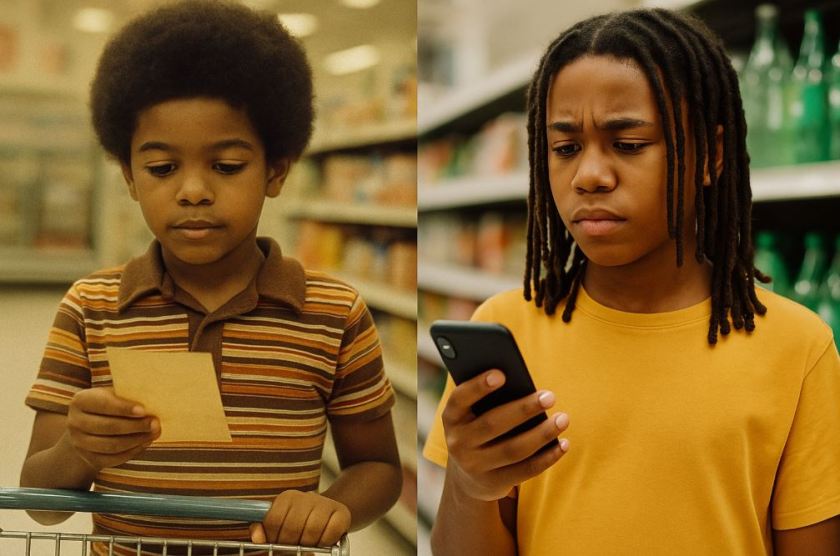
When I was a kid, going to the store wasn’t just a quick errand — it was a rite of passage. At six, seven, eight years old, parents trusted us with a handwritten list (on a slip of paper easy to lose, by the way), a couple of coupons, and the expectation that we’d come back with the right stuff.
Now, we might’ve gotten it wrong the first time or two, but you only had to mess up once before you figured out how serious your parents were. You learned quick.
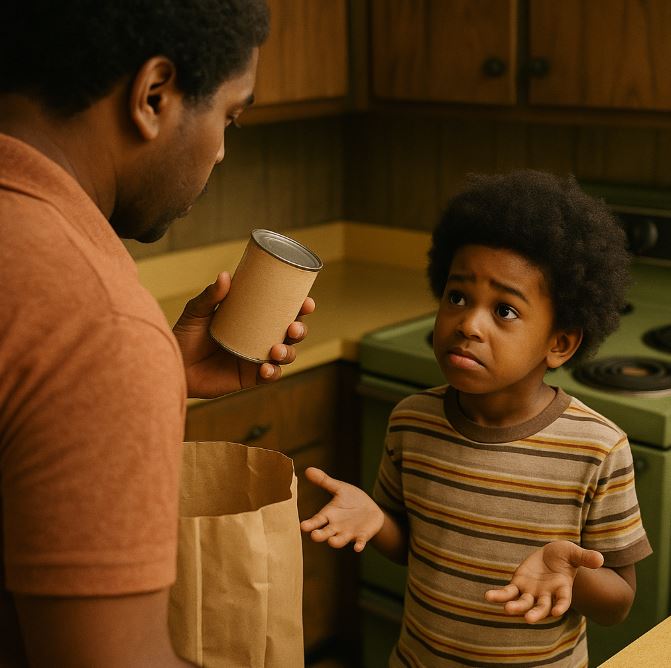
I’ll give you an example. My father would send me for Hormel Chili with beans. If I couldn’t find it, sometimes I’d grab the one without beans, thinking I was being helpful. He’d shut that down quick: “If I told you with beans, don’t bring me without. If you didn’t see what I asked for, don’t bring anything at all.”
Other times I’d take his words literally, come back empty-handed, and he’d say: “Why didn’t you get the Hormel without beans?” It kept me in a state of confusion, but it forced me to think about what he was making, to problem-solve, and to get sharper about what was really being asked.
That was the training. That was the standard.
Kids Today Have Every Advantage — And Still…
Fast-forward to today. Kids have every advantage in the world.
- Instead of scraps of paper, they’ve got notes apps or texts.
- If they’re not sure about an item, they can call right from the aisle — no need to run to the payphone at the front of the store like we had to in the 70s (if we even had the coins to do it).
- They can take a photo and send it.
- They can shoot a quick video to you.
And yet … they don’t.

They come back with the wrong thing, or nothing at all. They won’t double-check, communicate, won’t take that extra step to make sure it’s right.
Back Then, We Played “The Price Is Right”
Another thing: we knew the prices. That helped us sharpen our problem-solving skills in ways kids today can’t even imagine.
It wasn’t just about picking up items. It was about knowing how much money you had to work with versus what you actually wanted and needed to purchase. We saw it on The Price Is Right. We saw it in life.
Take the candy store. If you had a dollar, you could walk out with 100 pieces of penny candy. Or maybe you mixed it up — a few lollipops, a couple candy bars, a bag of chips. But sooner or later, you hit that one-dollar ceiling, and you had to figure out how much and what to purchase.
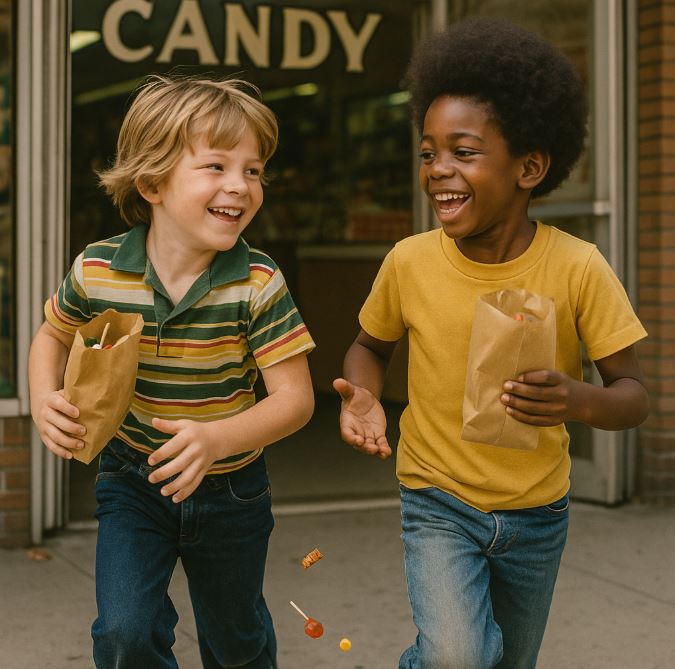
We used our brains. We did the calculations in our heads, summing up what we’d pay before we got to the register. It became a little contest, seeing how close we could get to the exact amount.
Kids today? They’ve got calculators right on their phones. Do they use them to figure totals? Of course not. That would involve a teenie tiny bit of work!
And don’t get me started on grocery stores versus convenience stores. We knew the grocery store was the best option — not just because of the coupons our parents gave us, but because we studied the sale papers. We put in the research.
Kids today? They’re content with running to the convenience store and paying twice as much for half the product. A candy bar at the C-Store costs you an arm and a leg, and it’s smaller than the one you’d get at the grocery store.
I don’t know if I want to call it laziness, ignorance, or just plain stupidity… but there it is.
The On-The-Job Training We Chose to Take
Here’s the real kicker: we received on-the-job training from our parents — but they didn’t stand over us and say, “Pay attention.” We chose to.
Yeah, we begged for every sugary thing in the aisle just like kids do today. But at the same time, we were watching. We were learning. We noticed when our moms grabbed the same product with two different brand labels, comparing the cost and the contents. We learned how to weigh quality, quantity, and price without a word being spoken.
Today? These kids will follow us through the store and not only beg for everything in the aisle — they’ll go missing and add another ten minutes to our shopping trip because now we’re looking for them. And if we’re not looking for them, they’re crying and asking how much longer this will take.

So when we eventually hand them a list and say, “Run in and grab a few items,” what we get back is:
“I don’t know how. Can you come with me?”
What’s the Difference?
We were built different.
We were built with the drive to get it right the first time — because we knew we weren’t getting a ride back to the store for round two. We were built with resourcefulness, with the grit to figure it out, even in confusion.
And in the end, it wasn’t really about groceries. It was about learning how to think, how to pay attention, how to be accountable.
Something a smartphone still can’t teach.
Like what you read? Have a comment about your parents or your children during grocery shopping? Leave a comment in the section below. And be sure to sign up at the bottom for notification of future articles from Kenny’s Camera, Cooking & Crazy Confessions at ZootsBlogSpot!

